
Ariston Strategy
Are Traditional Marketing Agencies Dead? Why AI-Powered Boutiques Are Winning
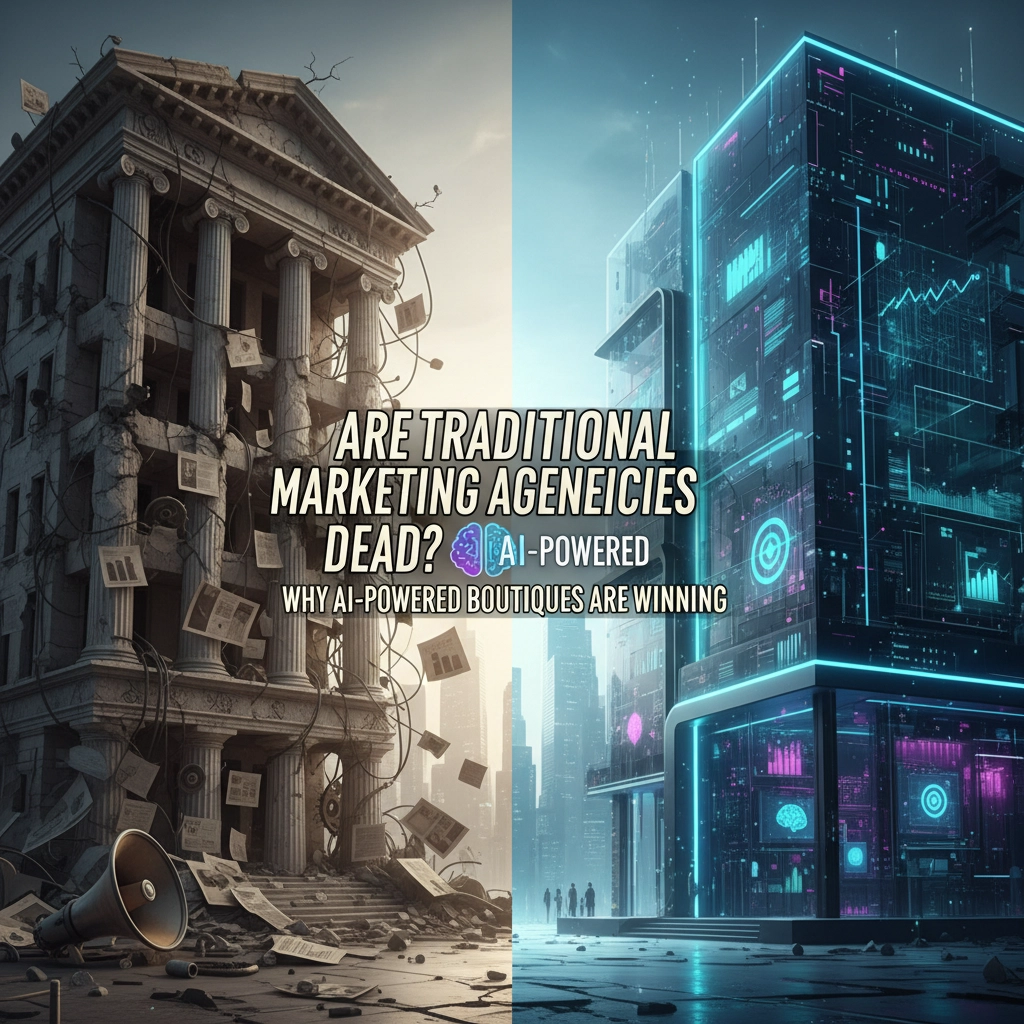
The marketing agency landscape is experiencing its most dramatic transformation since the digital revolution. While traditional agencies aren't exactly dead, they're fighting for survival in an industry that no longer rewards the old playbook. Meanwhile, specialized AI-powered boutiques are capturing market share at an unprecedented rate.
The question isn't whether traditional agencies will survive: it's whether they can adapt fast enough to stay relevant.
The Perfect Storm Hitting Traditional Agencies
Traditional marketing agencies are facing what industry insiders call a "perfect storm" of challenges that threaten their core business model.
Budget Constraints Meet Sky-High Expectations
Marketing leaders are caught in an impossible squeeze. Persistent inflation, economic uncertainty, and cautious C-suite spending have slashed marketing budgets across industries. Yet client expectations haven't just remained high: they've escalated dramatically.
Progress reports and vanity metrics no longer cut it. Clients demand direct pipeline impact, measurable sales growth, and ROI that can be tracked to the penny.

The AI Commoditization Crisis
Content creation, campaign optimization, performance analysis, and even creative brief development can now be handled by AI tools or performed in-house by marketing teams.
When a marketing manager can generate months of social content in an afternoon using AI, or when automated bidding algorithms consistently outperform manual campaign management, traditional agencies lose their fundamental value proposition.
Talent Wars and Margin Pressure
Top strategists, data analysts, and creative directors are increasingly expensive to retain, but agencies can't pass these costs through to clients who can source many services elsewhere. This creates a vicious cycle: agencies need the best talent to differentiate themselves, but can't afford to keep them without raising prices that clients won't accept.
The Death of the Generalist Model
The "we do it all" agency model isn't just struggling: it's fundamentally broken.
Clients no longer trust generalist agencies to deliver best-in-class results across multiple disciplines. They'd rather work with three specialized partners who excel in their respective areas than one agency that offers mediocre performance across ten services.
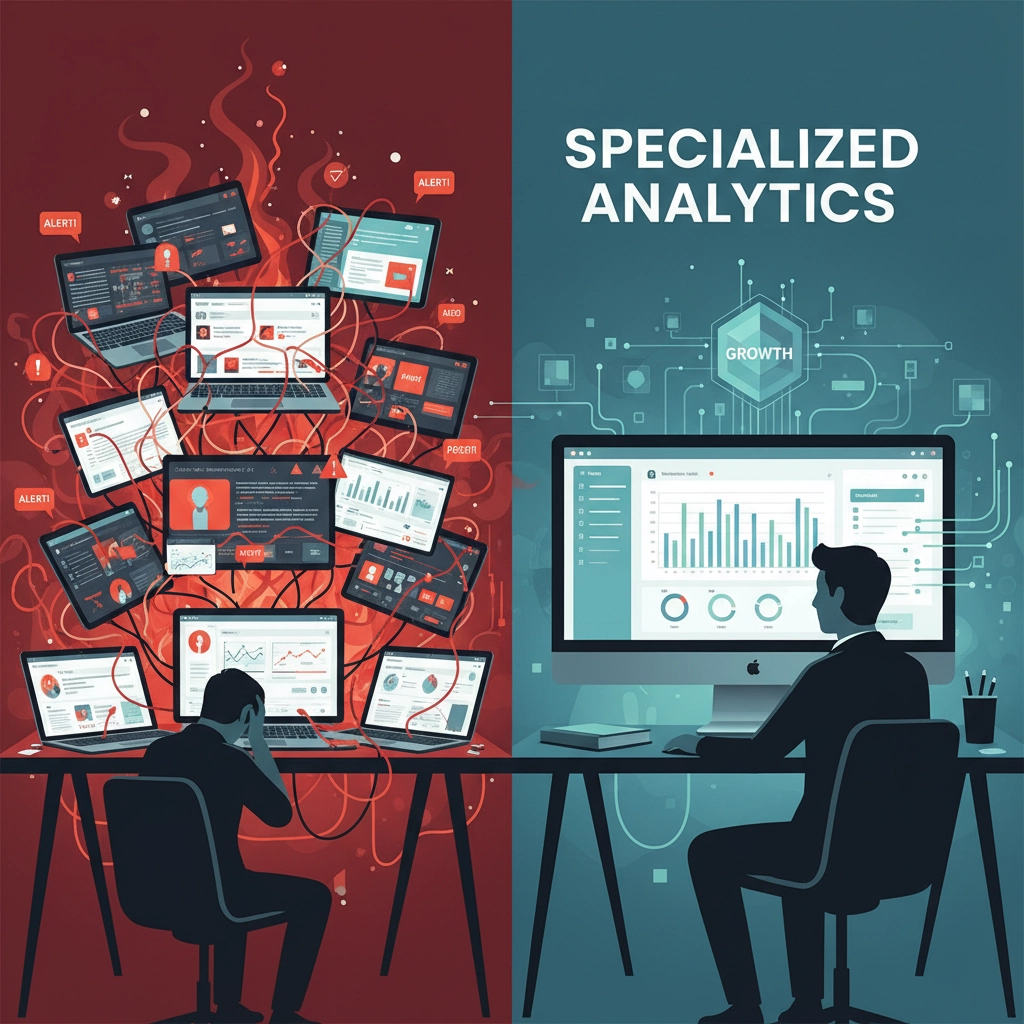
- Develop deeper expertise in specific channels or industries
- Command higher rates for genuine specialization
- Build proprietary methodologies and tools
- Attract talent who want to be experts, not generalists
- Create defensible competitive moats
Why AI-Powered Boutiques Are Winning
The agencies thriving in this environment aren't fighting AI: they're weaponizing it.
Efficiency Without Sacrifice
Smart boutiques use AI to handle routine tasks: data analysis, report generation, content optimization, and campaign monitoring—while freeing human talent to focus on strategy and creative problem-solving.
Superior Data Intelligence
Agencies using AI analytics can identify patterns, predict trends, and optimize performance in real-time.
Strategic Focus Over Service Delivery
Instead of selling services, they sell outcomes. They compete on results, not price.
The Market Reality Check
Digital marketing budgets increased 11.1% among U.S. CMOs over the past twelve months, with particularly strong growth in mobile marketing and paid advertising.
Clients are consolidating partnerships, being far more selective about who they work with.
The New Client Expectations
Today's marketing leaders want agencies that can:
- Demonstrate deep industry or channel expertise
- Integrate seamlessly with their existing technology stack
- Provide strategic insight beyond campaign execution
- Deliver measurable business impact, not just marketing metrics
- Adapt quickly to changing market conditions
The Survival Blueprint
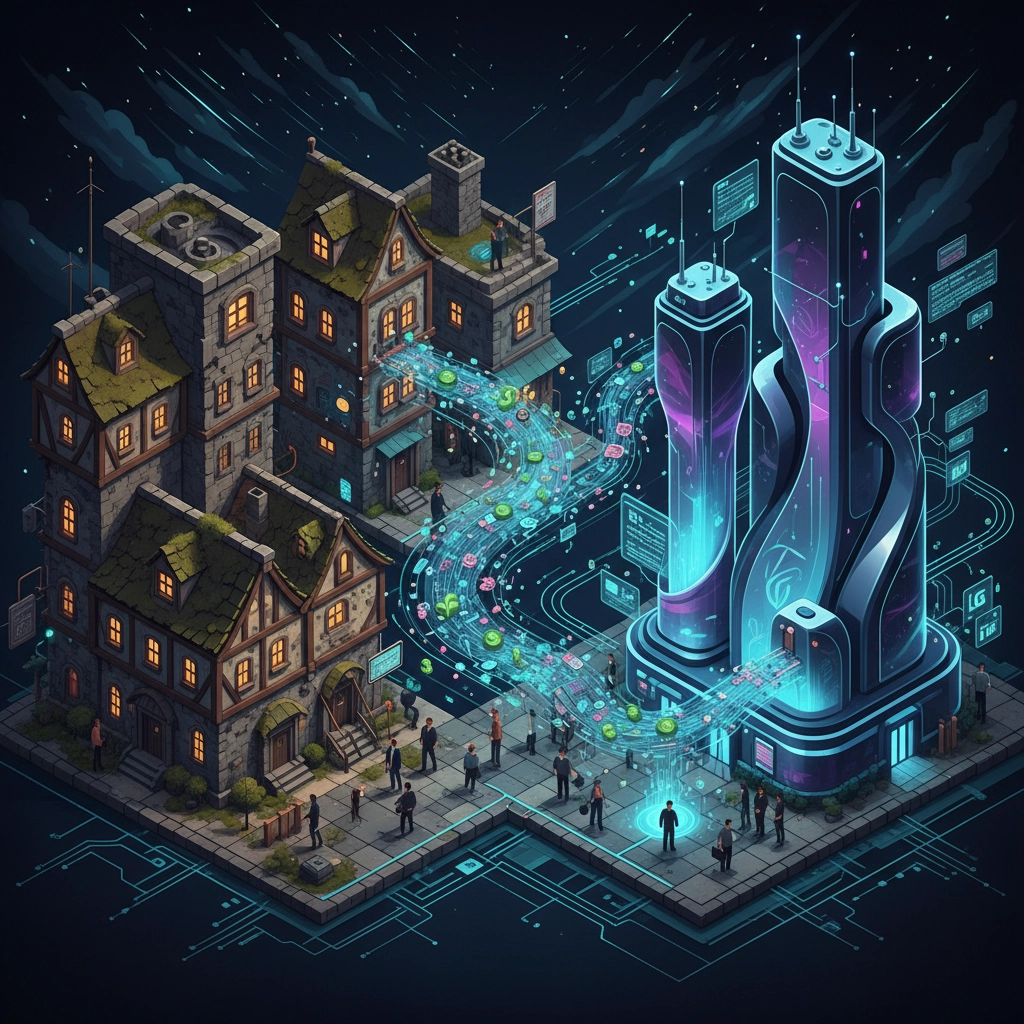
Ruthless Specialization: Abandon the full-service model for true expertise.
AI Integration: Don't fear AI, use it to enhance outcomes.
Value Reframing: Shift from selling time to selling expertise and results.
The Verdict
Traditional marketing agencies aren't dead: they're evolving.
The future belongs to those who combine human insight with AI, deep specialization with creative problem-solving, and strategic thinking with measurable execution.
Will you evolve with the market, or become a cautionary tale about the agencies that didn't?